
Beer and Pasta: A Duo That Breaks Stereotypes
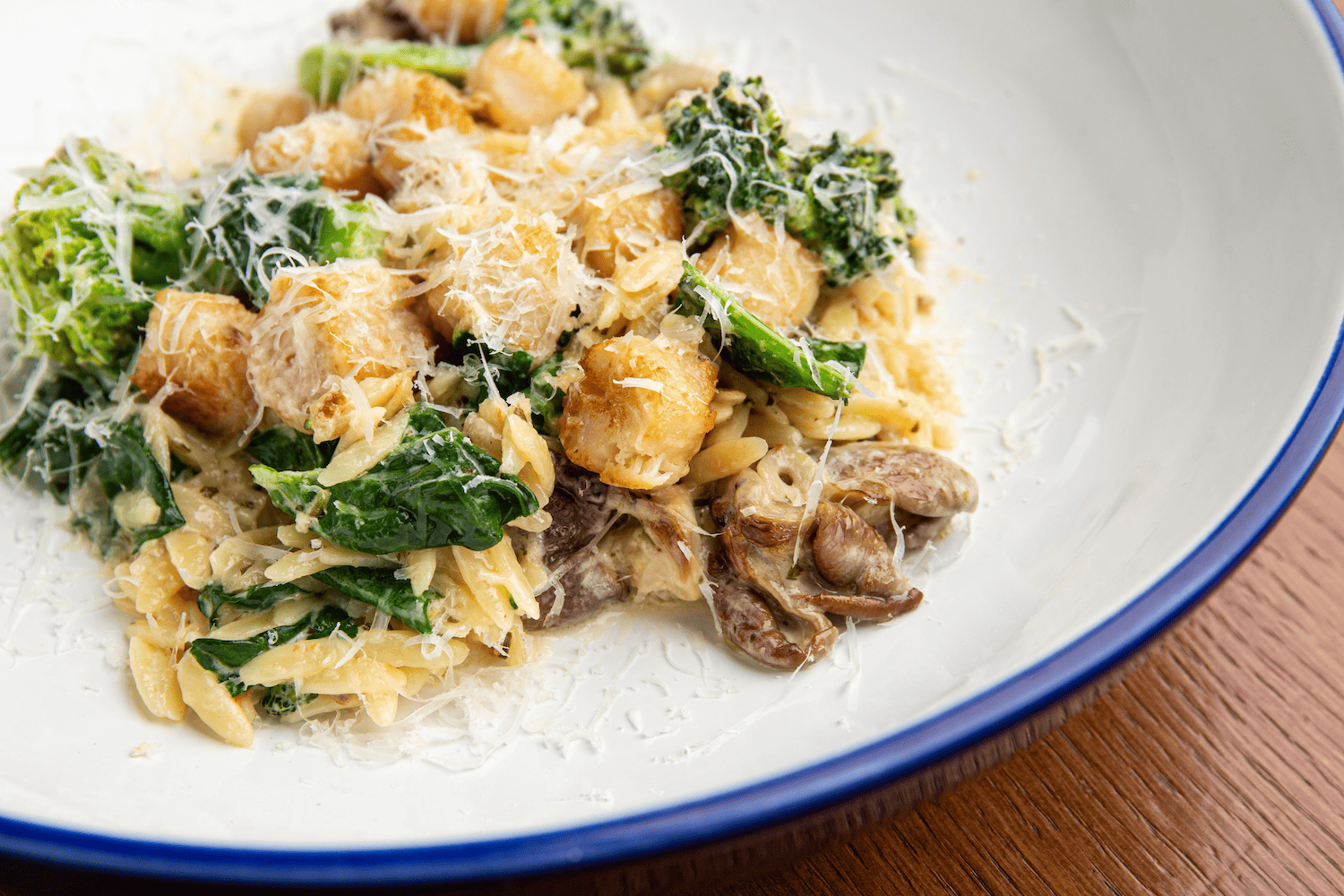
- Why pasta pairs perfectly not only with wine, but also with beer
- Which beer goes with creamy and cheesy sauces
- Beer for tomato-based pasta, bolognese, and seafood
- Successful pasta and beer pairings from the Lambic menu
When it comes to choosing a drink to accompany pasta, the mind automatically conjures a glass of wine: red with bolognese, white with seafood, and Chianti with spaghetti in tomato sauce. However, beer can be just as sophisticated, complex, and fitting a partner for pasta as wine.
But how do you pair beer with pasta? The rules are simple: carbonara calls for a helles, spicy arrabbiata calls for a pilsner, and pasta with truffle calls for a gueuze. In this article, we’ll explore in detail why beer pairs with pasta just as well as wine, which styles to choose for creamy, tomato-based, and seafood sauces, and we’ll give you real examples of pairings from the Lambic menu.
Why pasta pairs perfectly not only with wine, but also with beer
There’s a myth that beer is a simpler drink than wine, fit only for snacks like pizza or salted nuts. But that’s simply not true: modern beer boasts a multifaceted aromatic profile — from citrus and tropical fruits to coffee, caramel, dark bread, and even truffle.
Why does beer work so well with pasta? There are three reasons:
— Effervescence and acidity. Like wine, beer contains carbonation that literally «cleanses» the palate after a rich or cheesy sauce.
— Bitterness as balance. Unlike wine, beer has hop bitterness. This becomes an ideal counterweight to fats. Where wine might feel too soft or, conversely, too tannic, a properly chosen beer with a hint of bitterness will «reset» the palate.
— Umami and glutamates. Pasta with tomatoes, Parmesan, or mushrooms is rich in glutamic acid, which provides that deep, savory umami taste. Beer also contains naturally occurring glutamates. Together, beer and pasta create a perfect balance.
Which beer goes with creamy and cheesy sauces
The main challenge with pasta in cheese or cream sauces is that taste buds quickly become dulled by the abundance of fat. The drink’s job here is not to overpower the creaminess, but to refresh the palate.
What to drink with pasta:
— German helles, which has a soft malty flavor with minimal hop bitterness. Its bready and honeyed notes harmonize perfectly with dairy proteins. It’s light enough not to overshadow the sauce, yet structured enough to handle its richness.
— Belgian blanc (witbier) — an unfiltered wheat beer with notes of coriander and orange peel. It acts like lemon zest in a risotto: adding freshness and citrus contrast to a rich dish.
— Cream stout. The lactose in such a stout echoes the cheesy sauce beautifully. This beer is especially good with blue cheeses.
On the other hand, it’s best to avoid beers with extreme bitterness — they can clash with the cream, leaving a plasticky, unpleasant aftertaste.
Beer for tomato-based pasta, bolognese, and seafood
Wine does pair well with these pastas, but finding the perfect beer is no challenge either. Here are a few specific recommendations:
— With tomato-based pasta and pizza, you need a drink with its own acidity, but it’s important not to overdo it — otherwise, it becomes inedible. An excellent choice is pilsner. It has a grassy, slightly spicy flavor and high carbonation that perfectly «cancels out» the acidity and highlights the sweetness of tomatoes.
— Bolognese is an ideal match for Belgian dubbel. This beer doesn’t overpower the meaty flavor but rather enhances it, like a fine balsamic vinegar. The carbonation of dubbel is gentle enough not to conflict with the dish.
— For seafood, we recommend gose — a wheat beer with salt and coriander, sour and refreshing. It will highlight the flavor of shrimp, mussels, or scallops, while its acidity helps reduce any fishy aftertaste. A sour (sauer) is also a great choice — its tropical tartness will be equally appropriate.
Successful pasta and beer pairings from the Lambic menu
At Lambic restaurants, we’ll always recommend a great beer to go with your pasta — don’t hesitate to ask your server. But if you’d like to come prepared, check out these pairings:
— Ptitim pasta with crispy chicken and oyster mushrooms paired with Lindemans Kriek. The sweet-and-sour cherry contrasts with the crispy chicken skin, while the light tartness and almond notes underscore the earthy flavor of the oyster mushrooms.
— Fettuccine with brisket, mushrooms, and Parmesan in a sweet pepper sauce paired with Lindemans Oude Gueuze Cuvée René. The high acidity of the gueuze cuts through the richness of the brisket and Parmesan, while the sweet pepper is balanced by the sourness.
— Tagliolini with seafood in a creamy wine sauce paired with Lindemans Faro. The gentle caramel sweetness doesn’t overpower the delicate seafood, but softens the richness of the creamy wine sauce.
— Casarecce with braised duck, shiitake mushrooms, and bone marrow paired with Westmalle Trappist Dubbel. Notes of fruit and caramel pair beautifully with the deep meaty flavor of duck and the umami of shiitake.
— Lemon spaghetti with chicken breast in a creamy sauce paired with Blanche Des Neiges. The coriander and orange peel in the beer «extend» the lemon note without overwhelming the creamy sauce.
— Ravioli with shrimp paired with Lindemans Old Kriek Cuvée René. The sweet-and-sour cherry harmonizes perfectly with the salty-sweet flavor of the shrimp.
— Roman-style carbonara paired with Allgäuer Stolz Blaubändele Helles. The minimal bitterness and high carbonation of the beer cleanse the palate from the creamy sauce.
— Spaghetti with beef meatballs in a meat sauce with Parmesan paired with Lindemans Oude Gueuze Cuvée René. The high acidity and dry, slightly apple-like flavor smooth out the richness of the dish.
We look forward to seeing you at Lambic!


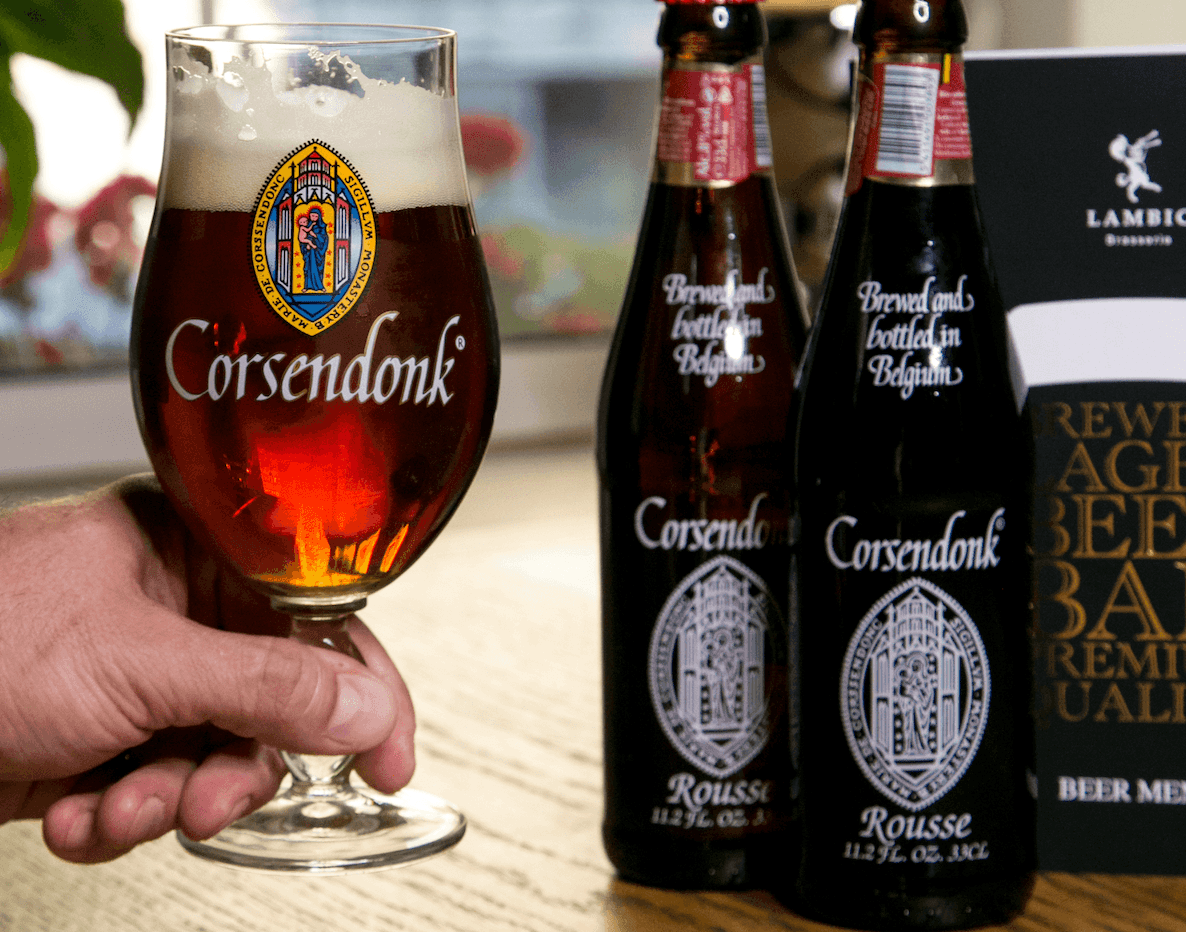
Corsendonk Blanche Beer: Belgian Classic with a Spicy Character
Contents From a Monastery Brewery to a Belgian Classic Taste Profile and Food Pairings Visit Lambic Corsendonk Blanche — a classic Belgian witbier that brings together everything people love about the style: lightness, fruity freshness, spice and a subtle hint of bitterness. Yet behind its light character lies a history spanning several centuries. Let’s explore where this beer came from, what makes it different from other wheat beers, and which dishes best bring out its flavour. From a Monastery Brewery to a Belgian Classic The history of the Corsendonk brewery dates back to the late 14th century. In 1398, the Corsendonk Augustinian Priory was founded in Oud-Turnhout, Belgium. Like many monasteries of the time, it had its own brewery and malt house, where beer was brewed for the community and its guests. This tradition continued for several centuries, until the monastery was closed in 1784 by order of Emperor Joseph II. The brewery ceased operations along with it. In 1906, Henricus Keersmaekers founded a new brewery while preserving the monastic brewing traditions. Half a century later, it was closed once again, this time for nearly three decades. A new chapter in the brand’s history began in 1982, when the historic Corsendonk name reappeared on beer labels. This marked the continuation of an age-old monastic tradition within modern Belgian beer culture. Today, the Corsendonk brand produces several beer varieties, including its world-famous witbier. Taste Profile and Food Pairings Corsendonk Blanche is an unfiltered Belgian white beer with an alcohol content of 4.8%. It has the characteristic pale colour of the style, with a natural cloudy appearance. Its bitterness is quite mild, so the hops are barely noticeable on the palate. The aroma features distinct notes of orange and coriander. These are complemented by soft malty notes and a gentle spiciness on the palate. The result is a fresh, rounded and delicate beer, making it an ideal choice for a summer evening or a relaxing break. Corsendonk Blanche is one of the best choices for discovering Belgian wheat beer. It is light, refreshing and full of character, with almost no bitterness, making it an excellent option even for those who prefer the mildest beer styles. The fresh citrus and spice profile of Corsendonk Blanche pairs particularly well with light dishes such as fish and seafood, salads, vegetables, poultry and mild cheeses. Visit Lambic Visit Lambic beer restaurants and discover Belgian classics for yourself. We’ll serve Corsendonk Blanche just as it should be and help you choose a dish that brings out its fresh, fruity and spicy character. We look forward to welcoming you!
19 November 2026
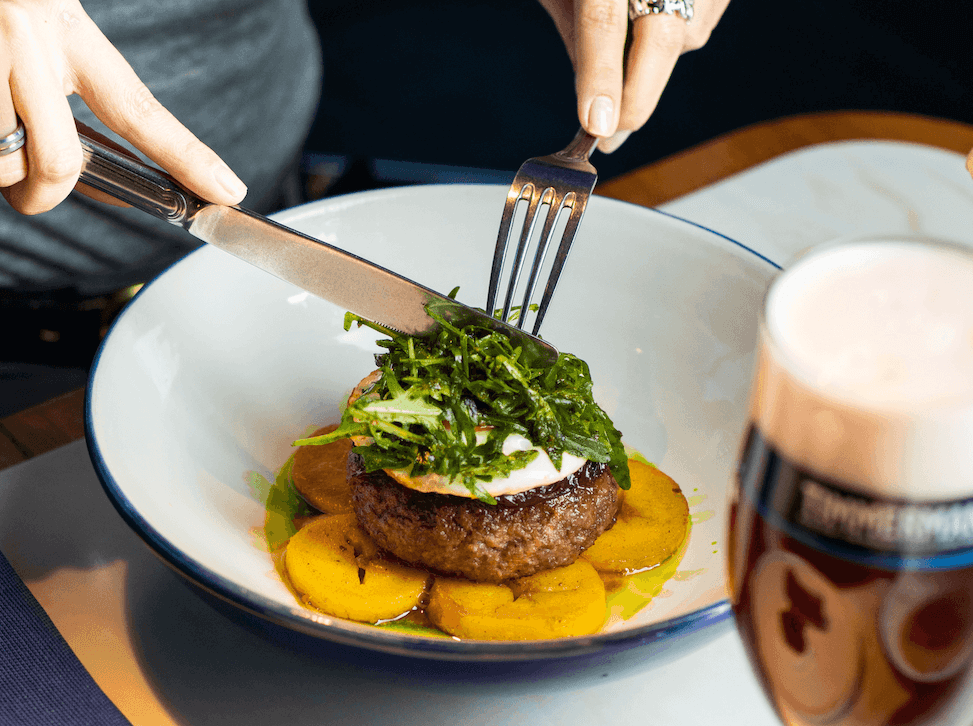
Beer and Grilled Food: How to Choose the Right Beer for Meat, Poultry, Fish and Vegetables
Contents Why grilled dishes pair well with beer Beer with meat and steaks What to choose for poultry and fish Beer with grilled vegetables How to choose a beer style based on the sauce and the intensity of the dish Visit Lambic Grilled dishes can be very different: from juicy ribeye steaks and spicy sausages to salmon, tuna, and vegetables. That is why there is no single beer style that pairs perfectly with every grilled dish. When choosing a beer, consider the fat content of the food, the intensity of its flavor, the degree of charring, and the spices and sauces used. The basic pairing principle is simple: the more intense the dish, the more expressive the beer should be. Light lagers, blonde ales, and wheat beers go well with fish and poultry that have delicate flavors, while amber and dark ales, IPAs, and stouts are better suited to beef, meat with a pronounced crust, and rich sauces. Why grilled dishes pair well with beer Grilling creates a distinctive browned crust on food, while the dish itself develops subtle smoky and caramel notes. Similar flavors — bready, nutty, caramel, and sometimes coffee and chocolate — can be found in beer thanks to the malt used in brewing. As a result, the flavors of the drink and the food naturally complement each other. There is another principle at work: contrast. Beer helps refresh your palate after fatty meat or a creamy sauce. Hop bitterness can balance richness, while the mild acidity of wheat beers and some Belgian styles works particularly well with fish, vegetables, and dishes with citrus notes. When choosing a pairing, consider four characteristics: the intensity of the dish, its fat content, the degree of charring, and the sauce. Beer with meat and steaks Grilled meat has a rich flavor, especially when it comes to ribeye, striploin, or New York strip steaks. A light, neutral lager can get lost alongside such meat, so it is better to choose a beer with a pronounced malt or hop profile. Here are some versatile recommendations for choosing the right beer to pair with steak: — Ribeye. IPA or pale ale balances the fat content and brings out the flavor of the seared crust. For steaks with pronounced smoky notes, try a stout or porter. — Lean steaks. Leaner cuts are best paired with a blonde ale or a moderately hopped pale ale, so the beer does not overpower the flavor of the meat. — Sausages and spicy meat. An amber ale is a versatile choice. Smoked sausages also pair well with dubbel, brune, or dark lager. With very spicy dishes, it is best to avoid an excessively bitter IPA, as it may intensify the heat. However, those who enjoy experimenting may find this combination appealing. What to choose for poultry and fish Poultry and most seafood have milder flavors than beef, so an overly rich dark beer can overpower the dish. Here are the beers we recommend pairing with fish and poultry: — Chicken and turkey. For poultry served without a rich sauce, choose a lager, pilsner, blonde ale, or blanche. These styles have a fresh flavor that does not compete with the delicate meat. If the chicken or turkey has been grilled to a pronounced golden-brown crust, an amber ale is a better choice — its malty notes will complement the flavor of the browned meat. — White fish. Sea bass, gilthead bream, and other white fish pair best with pilsner, light lager, blanche, or Belgian blonde. Wheat beers are particularly good at bringing out the flavor of fish served with lemon, herbs, vegetables, or aromatic seasonings. — Salmon and tuna. Grilled salmon can be served with a blonde ale, amber ale, or moderately hopped pale ale. Tuna has a density and texture closer to meat, especially when quickly seared on the outside while remaining juicy inside. So, in addition to light Belgian styles, you can pair it with a pale ale or a less aggressive IPA. Beer with grilled vegetables Lager, pilsner, blanche, and blonde ale pair well with zucchini, broccoli, cauliflower, peppers, and other relatively light vegetables. These styles preserve a sense of freshness without overpowering the flavor of the dish. Eggplant, mushrooms, and well-charred corn have a richer flavor. For these, try an amber ale or Belgian brune. The beer’s malty and caramel notes will complement the vegetables’ bold, slightly sweet, and smoky flavors. If the vegetables are prepared with plenty of spices, garlic, or aromatic herbs, try a pale ale or an IPA with moderate bitterness. For vegetables served with sweet chili sauce, a softer, maltier beer is a better choice: overly intense bitterness can make the sauce taste even spicier. How to choose a beer style based on the sauce and the intensity of the dish One common mistake is choosing beer based only on the main ingredient. A steak seasoned with salt and pepper and the same steak served with a creamy cheese sauce are completely different in flavor, and they call for different beers too. Flavor of the dish or sauce Beer styles to try Creamy, mushroom Blonde ale, amber ale, brune Peppery Amber ale, pale ale, moderate IPA Greens, herbs Pilsner, blonde ale, pale ale, IPA Barbecue, caramel and smoky notes Amber ale, dubbel, brune Teriyaki Blonde ale, amber ale Sweet chili Blanche, blonde ale, amber ale Mustard Lager, pilsner, amber ale Lemon, citrus sauces Blanche, witbier, pilsner Rich cheese sauce Tripel, amber ale, brune There is one more important rule: the intensity of the dish and the beer should match. Light dishes call for light beers, while richer dishes need something more expressive. For example, sea bass with vegetables is better complemented by a light lager or blanche than by a full-bodied stout. Ribeye with a pronounced crust, on the other hand, can be served with a dark ale or IPA. If the meat comes with a pepper, mushroom, or cheese sauce, choose a more complex beer. And if you would rather not spend time figuring out which grilled dishes to order with your beer, simply visit the Lambic beer restaurant. Our menu features a wide variety of interesting dishes, while our beer list includes hundreds of labels from around the world. We are sure to find the perfect food and beer pairing for you, so you can enjoy every moment!
19 November 2026